Learning Development from the Ground Up: A Bolivian Reflection – Gustavo Blanco
Learning Development from the Ground Up_ A Bolivian Reflection – Gustavo Blanco
To give you a
sense of who you are reading right now, I will begin by introducing myself and
briefly sharing where I come from and what led me to attend the Global South
Study Week. For those who may not know, this program is a unique one-week
immersive experience where participants meet, learn from, and are inspired by
leading thinkers and practitioners in the field of international development.
My name is Gustavo, a recent sociology
graduate who, after studying in the United States, decided to return to my home
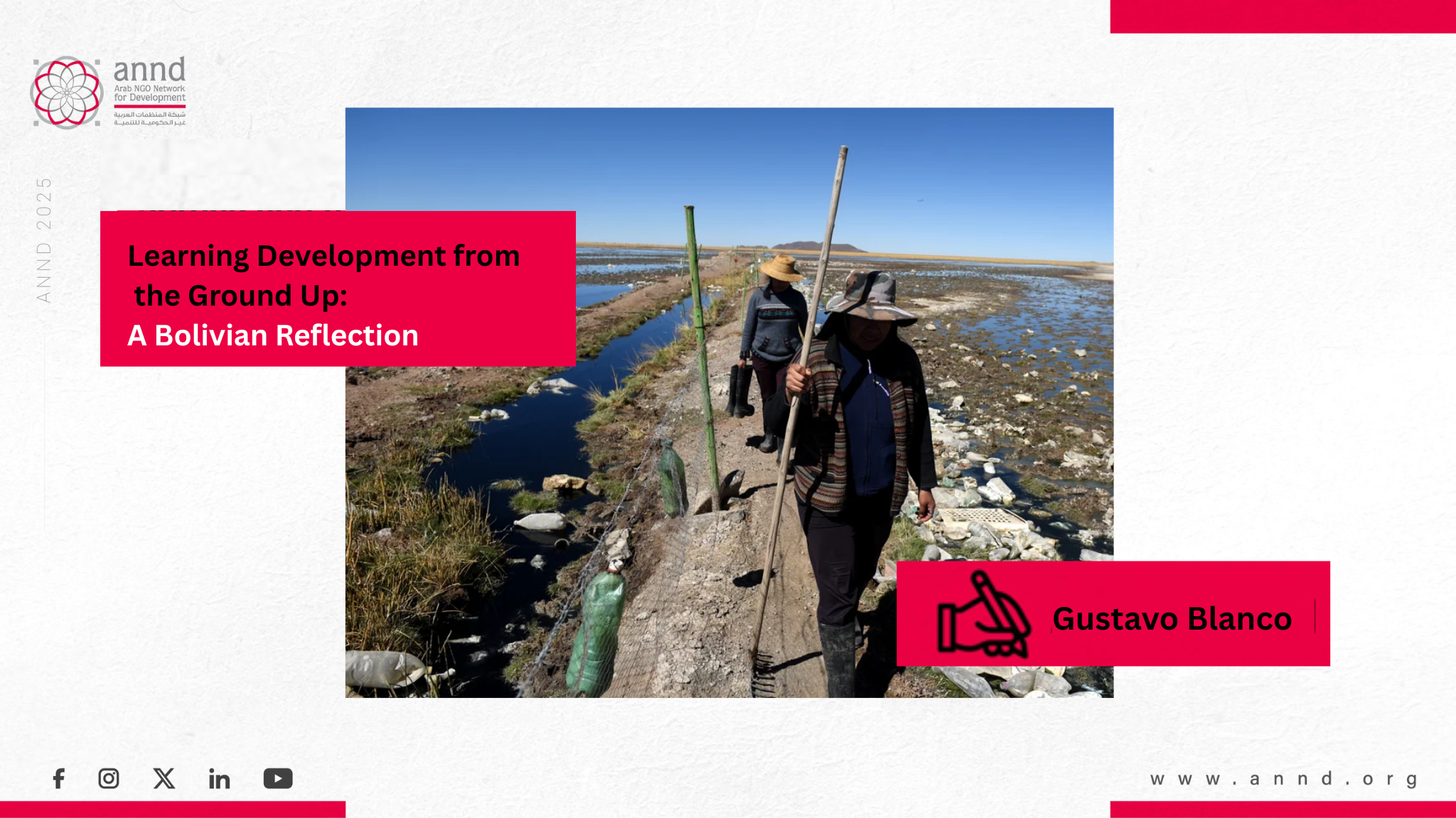
country, Bolivia, to contribute to the restoration of Bolivia’s second-largest
lake, Lake Uru-Uru, which has been severely affected by mining and plastic
contamination. Drawing on Indigenous knowledge, this effort focuses on
decontaminating the lake’s water through the plantation of totoras—native
aquatic plants capable of absorbing mining pollutants. This project proposes a
non-conventional solution and has offered a rare sense of hope for a lake that
has long been neglected by both local and national authorities.
Through this work, I came to understand
how incidental and fragile public policy can be when it comes to protecting the
environment from crises such as the one facing Lake Uru-Uru. The initiative I
was part of was one of the few established efforts aimed at restoring and
protecting this lake, which has been recognized as a site of international
importance under the Ramsar Convention for its role in climate change
mitigation. Notably, this effort was not led by a government institution or an
NGO, but by Indigenous youth defending their own territory—an undertaking that
is far from easy.
Preventing the devastating conditions
currently affecting the lake and endemic species such as flamingos would
require the government and the Ministry of Environment to officially declare
the area a protected site. However, as is the case in many countries of the
Global South, environmental protection is often relegated to second place when
economic development is framed as the top priority. This tension is especially
pronounced in Bolivia, where a deep economic crisis—driven by heavy dependence
on a declining natural gas industry and sustained state spending—continues to
shape policy decisions.
In times of crisis, the common response
is to seek any available means of recovery. As former Bolivian president Carlos
Mesa once framed it, this often translates into extending a hand to
international organizations for support. For many in the Global South, this has
come to be seen as the primary—or even the only—pathway toward development.
This belief was clearly reflected in Bolivia’s most recent elections, where
every candidate, including the eventual winner, presented international
organizations as the solution to the country’s economic distress.
I, too, supported this idea before
attending the Global South Study Week in Lebanon. There, I had the opportunity
to hear directly from experienced professionals such as Chee Yoke Ling, Roberto
Bissio, and Barbara Adams, who were able to clearly explain the complex
mechanisms through which international organizations can, rather than fostering
development, contribute to its stagnation. To illustrate this simply, imagine a
country needs funding to build a school. Institutions like the World Bank or
the Inter-American Development Bank may agree to provide support, but only
after extensive conditions are met—numerous forms completed, policies adjusted,
and procedures followed. As a result, what should be a straightforward project
becomes delayed, inefficient, and sometimes misaligned with the actual needs of
the community.
This pattern helps explain why countries
such as Argentina have accumulated enormous levels of debt that were intended
to lead to prosperity, yet have instead resulted in prolonged economic
vulnerability. A similar process is unfolding in Bolivia today. In order to
secure additional loans from international organizations or Western cooperation
agencies, the state has lifted subsidies on hydrocarbons. This decision
disproportionately affects the poorest segments of the population, benefits
wealthier groups, and places the entire country on edge due to the potential
for social unrest. Unlike in some other contexts, in Bolivia, when people
strongly oppose a policy, they have the power to mobilize and demand change—and
history shows that they often do. In the coming days, we will see how this
unfolds.
The most meaningful lesson I took from
the Global South Study Week was not simply a critique of international
institutions, but a deeper understanding of development itself. Hearing my
peers’ experiences—from their positions as activists for environmental
protection, gender equality, and human rights—helped me understand development
as a political, social, and lived process. It is not something that can be
reduced to loans, conditions, or external prescriptions, but rather a daily
struggle and collective effort. This is the same struggle we live every day
while planting totoras in Lake Uru-Uru: not waiting for local or international
support or imported technologies to arrive, but instead placing our own
nature-based solutions, grounded in Indigenous knowledge, at the forefront of
meaningful change.
Recent publications
From the Devastation of War to the Breakdown of Public Administration: How Were Lebanon’s State Institutions Depleted?