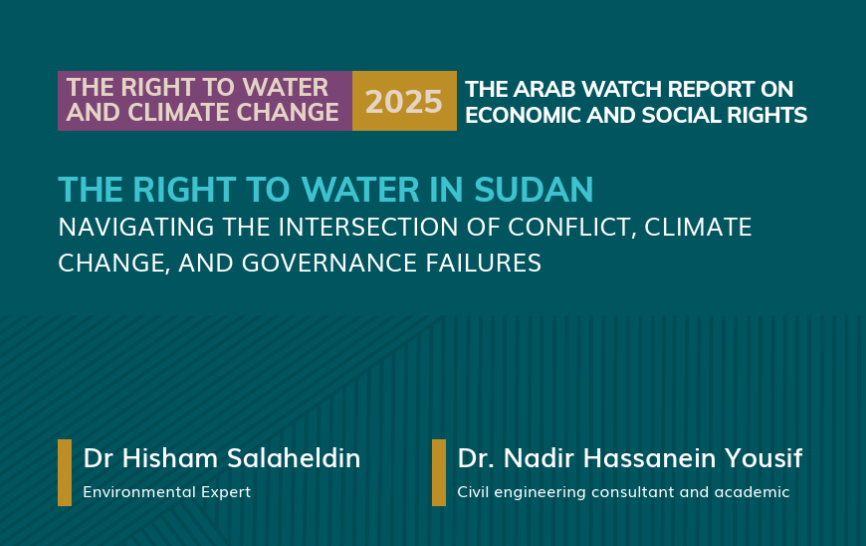

Case Study: The Right to Water in Sudan
Introduction
Access to clean, safe, and sufficient water is a fundamental human right. This right is integral to human health, development, and dignity, and it is essential for achieving Sustainable Development Goal (SDG) 6, which emphasizes universal access to water and sanitation. However, in Sudan, the realization of the right to water is increasingly compromised due to a complex interplay of climate change, conflict, institutional weaknesses, and socio-economic inequities. The country’s water crisis has evolved into a multifaceted humanitarian emergency that not only affects basic human survival but also highlights broader issues of governance, equity, and human rights (UNDP, 2022; UNEP, 2022).
Sudan’s water systems, heavily reliant on the Nile River, face mounting pressures from climate change and political instability. The country’s geographic diversity, from arid northern deserts to tropical southern regions, makes it particularly vulnerable to fluctuating rainfall patterns and extreme weather events, such as droughts and floods, which are further exacerbated by climate variability (Sutcliffe & Parks, 2020). These climatic stresses have led to disruptions in water supply, particularly in rural and conflict-affected areas where infrastructure is already weak or non-existent. The problem is compounded by the overextraction of groundwater and the degradation of vital ecosystems, including the drying of wetlands and soil salinization (UNHCR, 2025).
The ongoing armed conflict in Sudan, particularly since the outbreak of the civil war in April 2023, has further worsened the situation. Fighting has destroyed key water infrastructure, restricted access to water sources, and displaced millions of people. The conflict has also led to the weaponization of water resources, with belligerents targeting or blocking access to water supplies to undermine communities or exert control (OCHA, 2024). The targeting of vital water systems, coupled with the government’s weakened capacity to respond, has resulted in widespread water insecurity, especially in regions such as Darfur, Blue Nile, South Kordofan, and even Khartoum, the capital (UNICEF, 2023a).
This research seeks to investigate how the confluence of conflict, climate change, and governance failures has exacerbated Sudan’s water crisis, with a focus on the socio-economic and human rights implications for vulnerable communities. Specifically, the study addresses the root causes of water insecurity, the weaponization of water resources, the impacts of climate change, and the role of institutional weaknesses in water management. It also explores how these factors intersect to deepen inequalities, particularly for displaced populations, women, and children, who are disproportionately affected by water scarcity and contamination (Sax et al., 2023).
The research adopts a mixed-methods approach, combining qualitative interviews with key stakeholders, including policymakers, water management experts, and affected community leaders, with a quantitative survey to gather data on water availability, quality, and access. The study highlights the urgent need for climate-resilient water governance and greater accountability in protecting the human right to water. The findings offer policy recommendations to enhance water security in Sudan, advocating for more sustainable, equitable, and rights-based approaches to water management, particularly in conflict-affected and vulnerable regions (UNDP, 2022).
Recent publications
Who Enters the Age of Electricity? And Who Pays the Price? - Habib Maalouf