Trump’s Davos farce
In the introduction to his study on the rise to power of Louis Bonaporte, the German philosopher Karl Marx famously stated that history repeats itself, the first time as a tragedy, and the second one as a farce.
The first time that the United States tried to acquire a neighbouring island of strategic interest was in 1854, and the island was Cuba. After having duplicated its territory for a mere 15 million dollars by buying the Louisiana from Napoleon I (uncle of the one Marx wrote about), the US wanted to continue expanding. Three prominent US diplomats in Europe recommended that “after we shall have offered a price for Cuba far beyond its present value, and this shall have been refused, (...) then, by every law, human and divine, we shall be justified in wresting it from Spain; and this upon the very same principle that would justify an individual in tearing down the burning house of his neighbor if there were no other means of preventing the flames from destroying his own home.”
The authors of this recommendation were Pierre Soulé, US Ambassador to Spain, John Y. Mason for France and James Buchanan for Britain. This proposal became known as the Ostend Manifesto for the Belgium town where they met. Buchanan, credited to be the main writer of the document, later became the 15th president of the US.
The Manifesto starts by arguing that: “It must be clear to every reflecting mind that, from the peculiarity of its geographical position, and the considerations attendant on it, Cuba is as necessary to the North American republic as any of its present members, and that it belongs naturally to that great family of states of which the Union is the providential nursery. From its locality it commands the mouth of the Mississippi and the immense and annually increasing trade which must seek this avenue to the ocean.”
Further, the Ambassadors feared that Cuban slaves could follow the rebellious example of Haiti (still called St. Domingo): “We should, however, be recreant to our duty, be unworthy of our gallant forefathers, and commit base treason against our posterity, should we permit Cuba to be Africanized and become a second St. Domingo, with all its attendant horrors to the white race, and suffer the flames to extend to our own neighboring shores, seriously to endanger or actually to consume the fair fabric of our Union.”
The authors recognize that “Our past history forbids that we should acquire the island of Cuba without the consent of Spain, unless justified by the great law of self-preservation. We must, in any event, preserve our conscious rectitude and our own self-respect. Whilst pursuing this course we can afford to disregard the censures of the world, to which we have been so often and so unjustly exposed.”
The Manifesto does not say that by becoming a State of the Union, Cuba would shift Congressional power in favour of the Southern states, adding to the slave-owners block two senators and nine representatives. Slaves could not vote but they counted as two thirds of a person in proportioning House seats to the States of their owners.
The House of Representatives voted to force the White House to publish the memo, and its content created a backlash that divided the Democratic Party then in power, pushed for the creation of the Republican Party by those opposing slavery and forced Spain to abandon any sale negotiation and strengthen instead its Navy. The island remained under European rule several decades more.
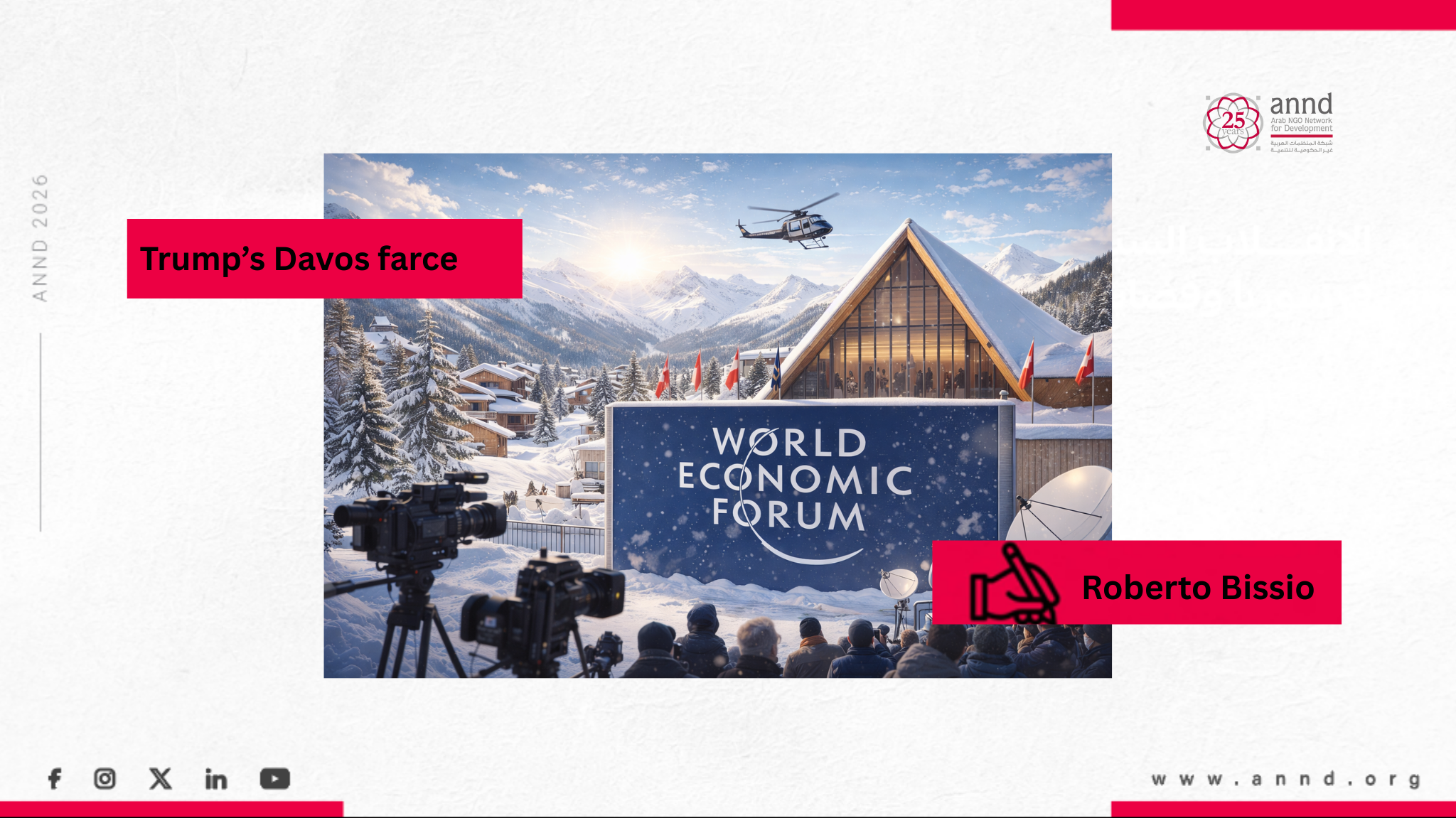
History repeated itself when Donald Trump went to Davos in January 2026 announcing its intention to acquire another island, Greenland, by any means, against the will of the people of Greenland and of the Kingdom of Denmark, of which the island is part. Trump’s disregard of the censures of the world led to a precipitous end of his farce. The day after his Davos speech, the US president announced that he had agreed on the “framework of a future deal with respect to Greenland” with Mark Rutte, general secretary of NATO, who has no authority whatsoever over the island.
The January 2026 Davos meeting of the World Economic Forum was also the setting in which Trump launched his “Board of Peace”, stretching the original mandate issued in November 2025 by the UN Security Council to support the reconstruction of Gaza and announcing instead that the BoP would be a permanent international organization, in obvious competition with the UN.
Turkey and Hungary are the only NATO members that joined the Board. Key US allies like France, Italy, the UK and Sweden declined the invitation on 24 other countries, including Brazil, China, India, Japan, Russia and the Holy See did not answer.
Canada, had its invitation rescinded after Prime Minister Mark Carney made a speech in Davos that, not only criticized Trump policies, but also received far more comments and praise than Trump’s intervention.
A board whose chair (Donald Trump, of course) has exclusive veto power and can invite and disinvite members at will does not look like a serious international organization and configures a vivid example of what PM Carney called “ a rupture in the world order, the end of a pleasant fiction and the beginning of a harsh reality, where geopolitics, where the large, main power, geopolitics, is submitted to no limits, no constraints.”
The WEF is, above all, the annual meeting of investors and is co-chaired by Laurence D. Fink, CEO of BlackRock, the world’s largest asset manager.
The value of the US dollar continued falling after Davos and the price of gold and silver climbed to record heights. The unpredictability of US policies is often quoted as having contributed to these results.
Before the end of January, the US president suffered another crisis, this time domestically, as the excesses of his anti-migrant policies led to criticism and defections even among his supporters.
Admitting his own hypocrisy, Carney -a former governor of the Bank of England- admitted that “we knew the story of the international rules-based order was partially false, that the strongest would exempt themselves when convenient, that trade rules were enforced asymmetrically. And we knew that international law applied with varying rigour depending on the identity of the accused or the victim”.
In such a scenario “middle powers must act together because if we're not at the table, we're on the menu”. To diversify from the US as its main trading partner, Canada has signed a “strategic partnership” with China and is negotiating free trade pacts with India, ASEAN, Thailand, Philippines and Mercosur. In the following days the EU signed a free trade agreement with Mercosur (still depending on the approval of a divided EU parliament) and with India and the EU has started conversations on trade and investment cooperation with the CPTPP, the trans-Pacific free trade agreement.
There were frequent conversations in Davos about the US leaving the WTO or, alternatively, about creating a Global Trade Organization (GTO) that would inherit the WTO rules but have an effective dispute-settlement mechanism, something that the US has been blocking for decades now.
Southern columnists welcomed Carney’s recognition that “great powers have begun using economic integration as weapons. Tariffs as leverage. Financial infrastructure as coercion. Supply chains as vulnerabilities to be exploited.” But the only novelty, really, is that close US allies are now affected. Cuba has been suffering economic blockade for half a century and sanctions , or the threat of using them to gain political leverage have been weaponized by the US for decades.
By allowing for the creation of the WTO outside of the UN, for the invasion of Iraq against a decision of the Security Council or the gradual transfer of authority over the economies of the South to the World Bank and the IMF (where the US has veto power), the “middle powers”, starting with the G7 members (France, Canada, Japan, the United Kingdom, Italy, Germany on top of the US), have co-created and benefitted from the “rules-based international order” they now denounce as “a fiction”.
According to Carney “from the fracture, we can build something better, stronger, more just” and that “this is the task of the middle powers”.
Can such a task be successful if it keeps ignoring and leaving the “small powers” out? The history of the unilateral imposition of neoliberal globalization at the end of the Cold War should not be repeated.
Recent publications