Social Insurance for Agricultural Workers in Lebanon
Including Agricultural Workers in Social Insurance in Lebanon
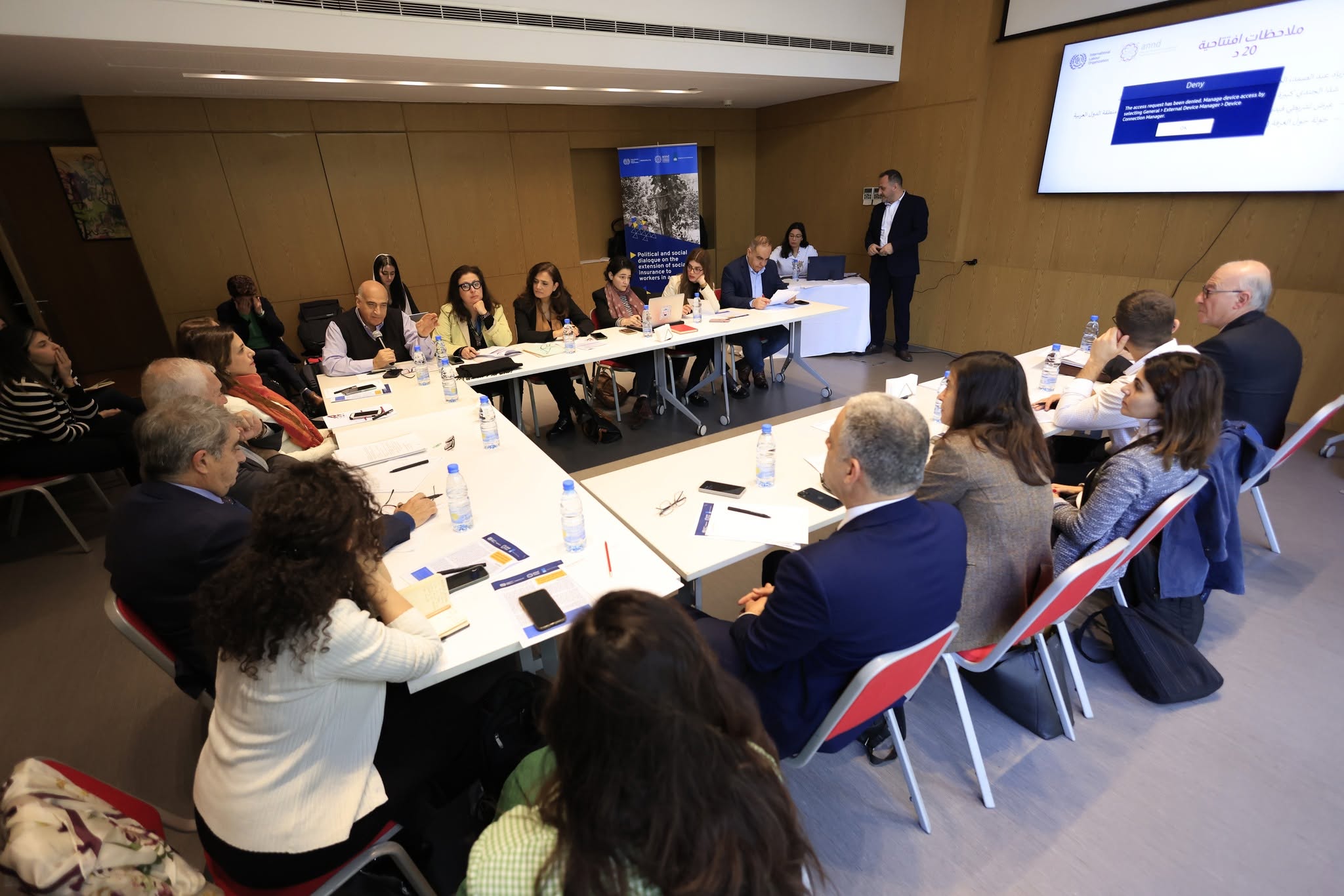
Stakeholder Workshops with Workers and Employers
23 and 25 April 2024
The Arab NGO Network for Development (ANND), in partnership with the International Labour Organization (ILO), organized a series of stakeholder workshops in April 2024 to advance dialogue on extending social insurance coverage to agricultural and agri-food workers in Lebanon.
The initiative brought together workers, farmers, employers, and relevant stakeholders to examine the structural factors that contribute to the exclusion of agricultural workers from social protection and to identify practical pathways towards more inclusive and equitable social insurance coverage.
The workshops aimed to contribute to more inclusive and equitable policies that place the rights and wellbeing of workers in the agricultural and agri-food sectors at the centre of social protection reform.
Why Agricultural Workers Need Stronger Social Protection
Agriculture plays an important economic and social role in Lebanon, particularly in rural and peripheral areas such as the Bekaa Valley and Akkar, where it provides employment opportunities and contributes to food security.
Yet agricultural workers remain among the most vulnerable and least protected groups in the labour market. The sector is characterized by high levels of informality, irregular and often low incomes, occupational health and safety risks, exposure to environmental and climate-related pressures, and limited access to social insurance.
The background documents prepared for the workshops note that 98.1 per cent of farmers and agricultural workers in Lebanon were working informally according to 2019–2020 figures, while agricultural workers and farmers continue to face significant gaps in labour and social protection.
Addressing Legal and Coverage Gaps
The workshops examined the legal and institutional barriers that have historically excluded agricultural workers from key labour protections, including social security, minimum wage protections, regulated working hours, leave entitlements, occupational health and safety, and protection against workplace injury.
Discussions also addressed the different situations faced by workers across the agricultural and agri-food sectors: workers who are legally insured but have experienced gaps in effective coverage, workers who are legally entitled to National Social Security Fund coverage but remain unregistered by employers, and non-permanent agricultural workers and farmers who remain outside mandatory insurance coverage.
Two Complementary Stakeholder Workshops
From Dialogue to Policy Solutions
The workshops formed part of a broader effort to strengthen policy and social dialogue around the inclusion of agricultural workers in social insurance, in line with Lebanon’s social protection reform process.
The discussions sought to identify measures suited to the Lebanese context, including ways to increase compliance with the registration of eligible agri-food workers, explore transitional coverage options, and ultimately expand effective social insurance coverage to workers who remain legally or practically excluded.
Towards More Inclusive Social Protection
By bringing workers and employers into the policy discussion, the initiative contributed to a more comprehensive understanding of the barriers to social protection in Lebanon’s agricultural sector and the reforms needed to address them.
The process aimed to support the development of more inclusive and equitable policies that recognize agricultural workers as rights-holders and ensure that social protection reform reaches workers who have historically remained among the least protected in Lebanon.